

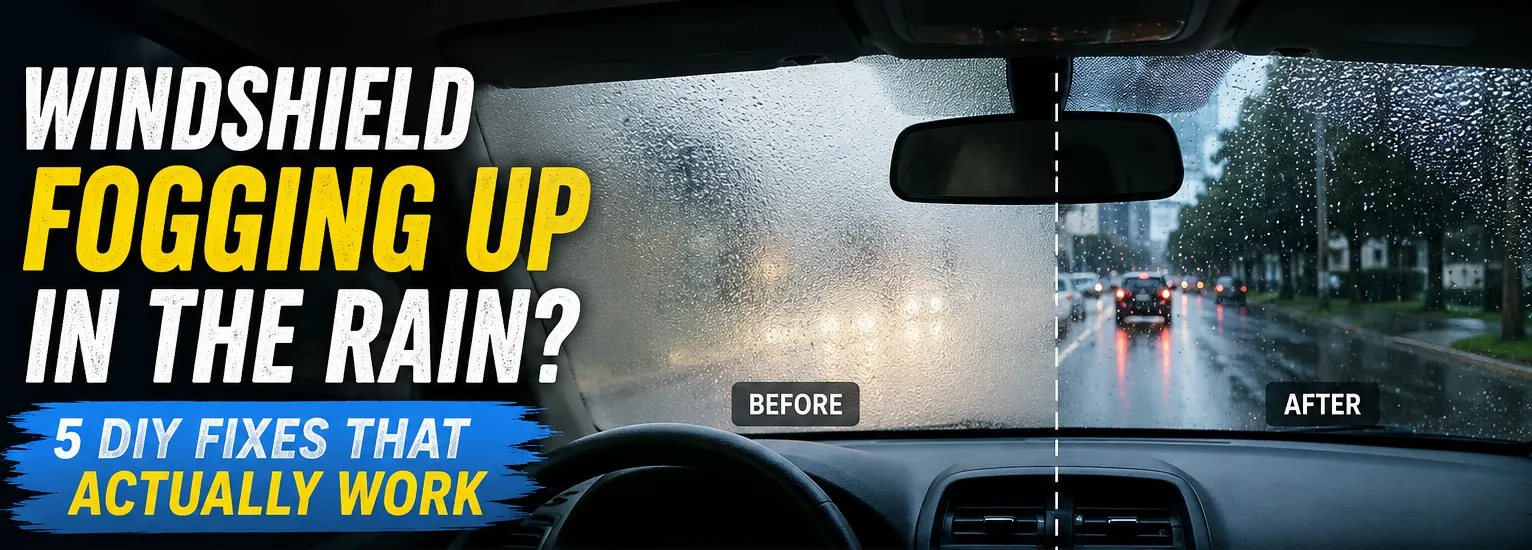

Windshield Fogging Up in the Rain? 5 DIY Fixes That Actually Work
You’re driving home in the rain, the world outside is already blurry enough — and then your windshield fogs up from the inside too. Suddenly you’re wiping the glass with your sleeve, squinting through a hazy patch, and hoping nothing jumps out in front of you.
So why does this keep happening, and more importantly, how do you stop it? Let’s break it down.
Why Does Your Windshield Fog Up in the Rain?

Fogging happens because of a simple science problem: warm, moist air inside your car meets the cooler glass surface, and the moisture condenses right there on the windshield. Rainy weather makes this worse in two ways — the air outside is cold and damp, and the air inside gets humid fast from your breath, wet clothes, and umbrellas dripping onto the floor mats.
Once you understand the cause, the fixes make a lot more sense. Here are five that actually work
1. Turn On the AC — Even If It’s Cold Outside
This trips up a lot of drivers. Your instinct in cold, rainy weather is to blast the heater, but that pushes warm, moist air straight onto the glass and makes fogging worse.
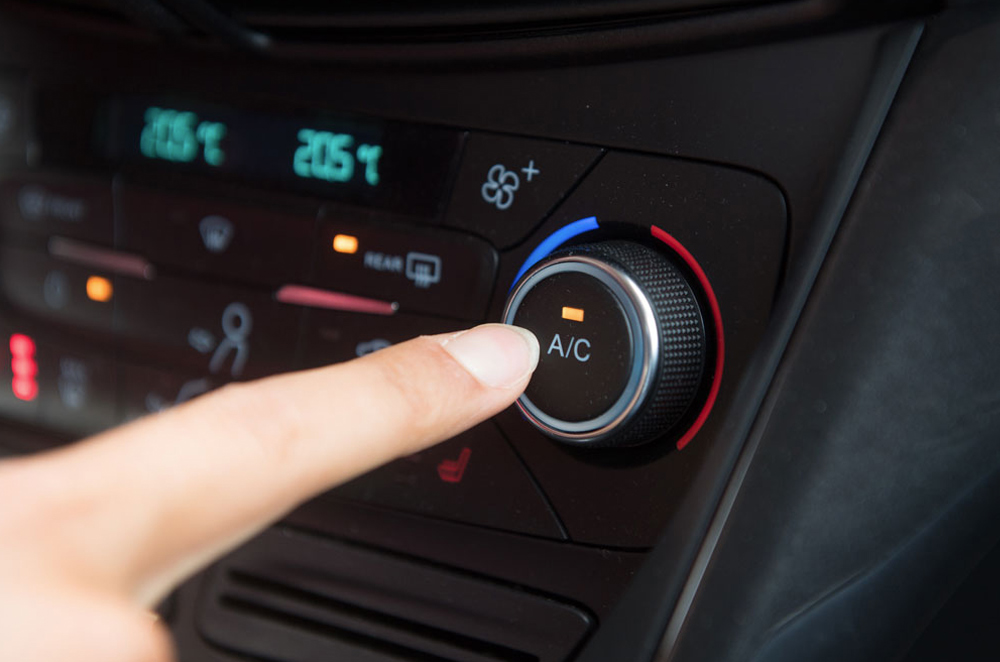
Instead, switch “ON” the air conditioning (yes, even in the rain) and set the airflow to hit the windshield directly. AC pulls moisture out of the cabin air, so the glass stays clear. If it feels too cold, you can run the AC alongside low heat — most cars let you combine both.
2. Use the Defrost/Defog Setting Properly
Every car has a windshield defrost button (usually a fan icon with wavy lines pointing at a windshield symbol). Turn it on, set the fan speed to high for the first minute or two, then dial it back once the fog clears.
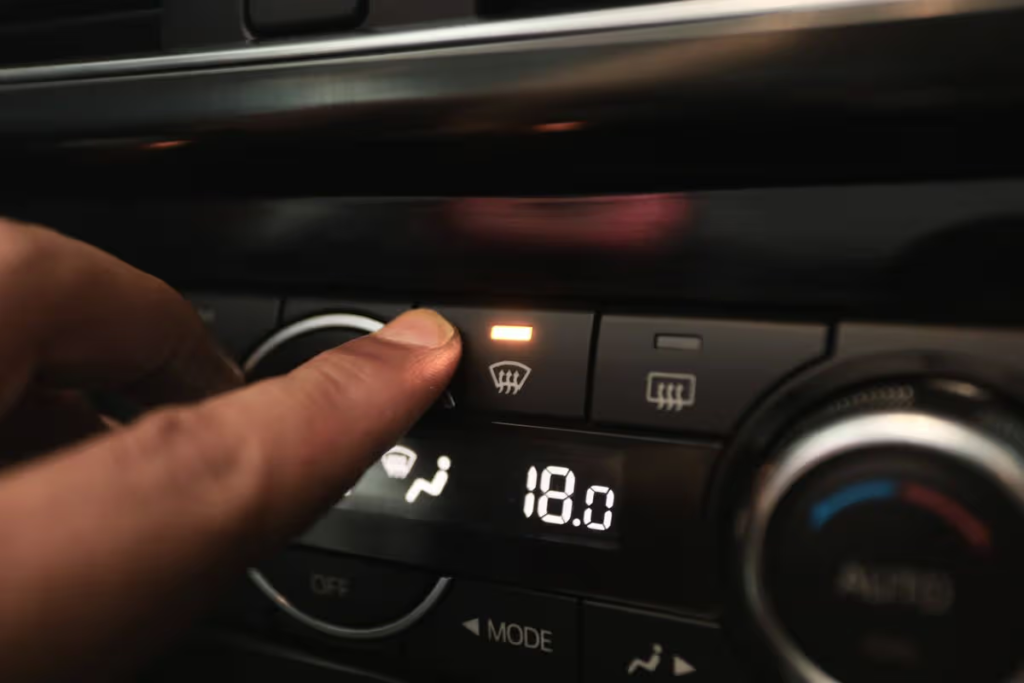
A quick tip: crack a window slightly while the defroster runs. It helps humid air escape instead of just circulating back onto the glass.
3. Keep the Cabin Air Fresh, Not Recirculated
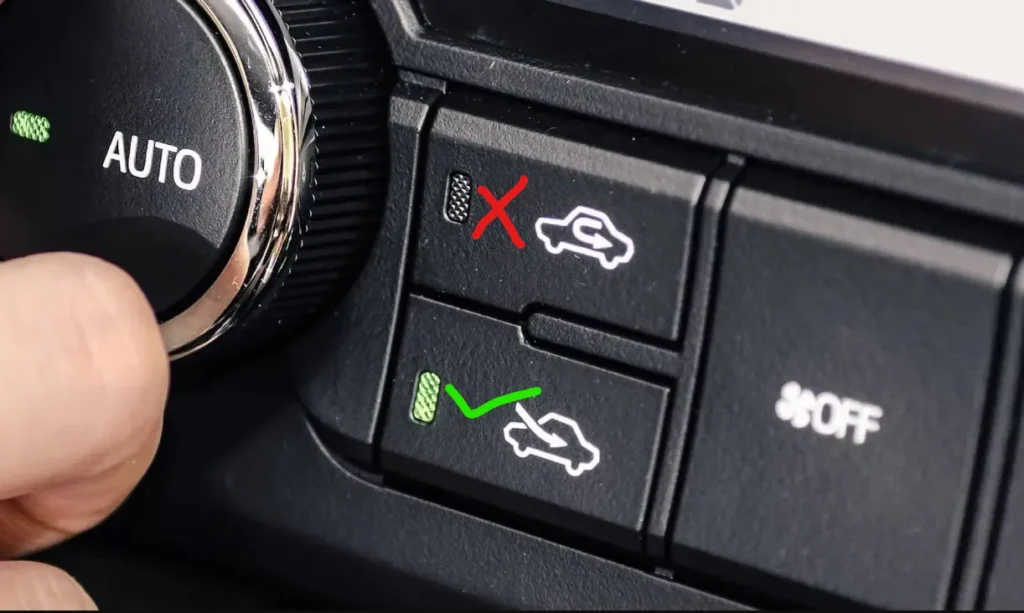
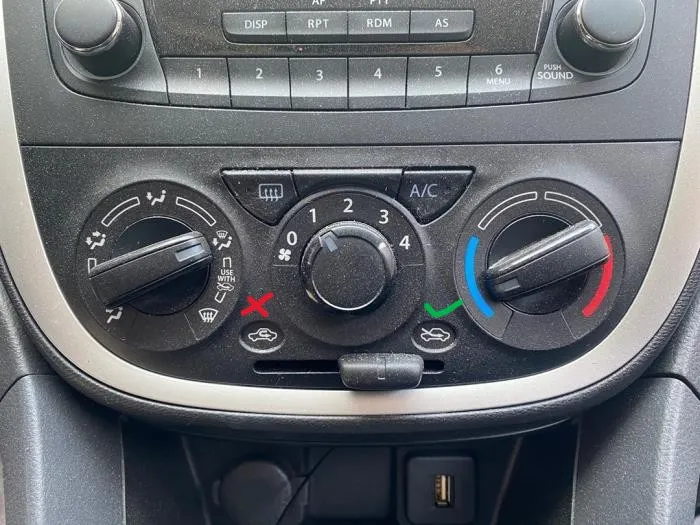
Recirculated air feels cozy, but it traps moisture inside the car instead of pulling in drier air from outside. During rainy weather, switch your ventilation to “fresh air intake” mode rather than “recirculate.” It takes a little longer to warm the cabin, but it dramatically cuts down on fogging.
4. Wipe Down Interior Glass with a Vinegar or Anti-Fog Solution
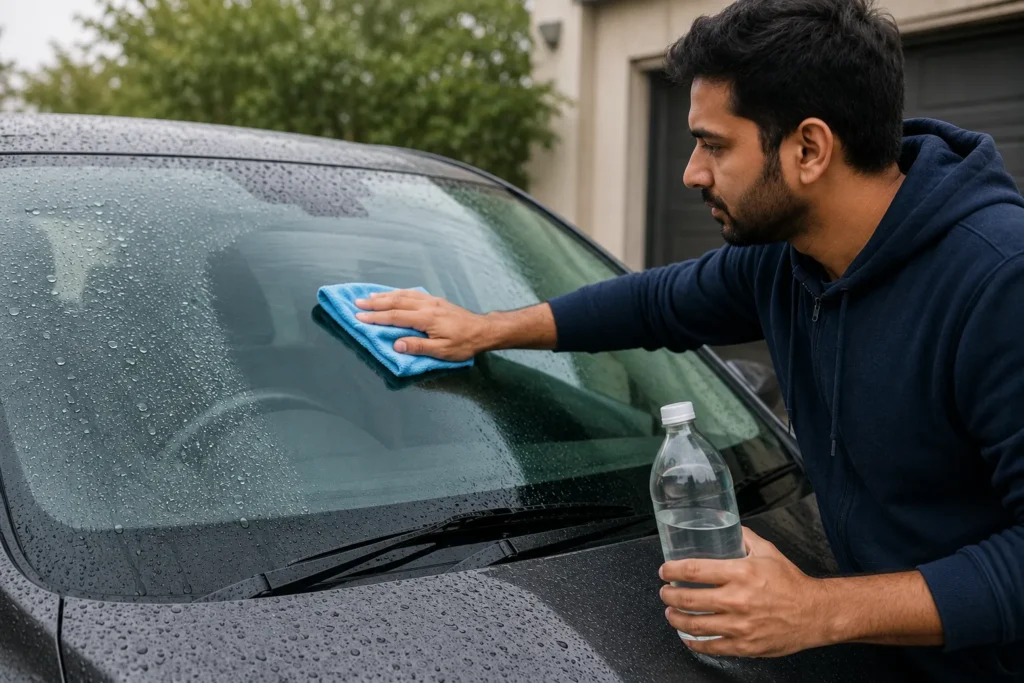
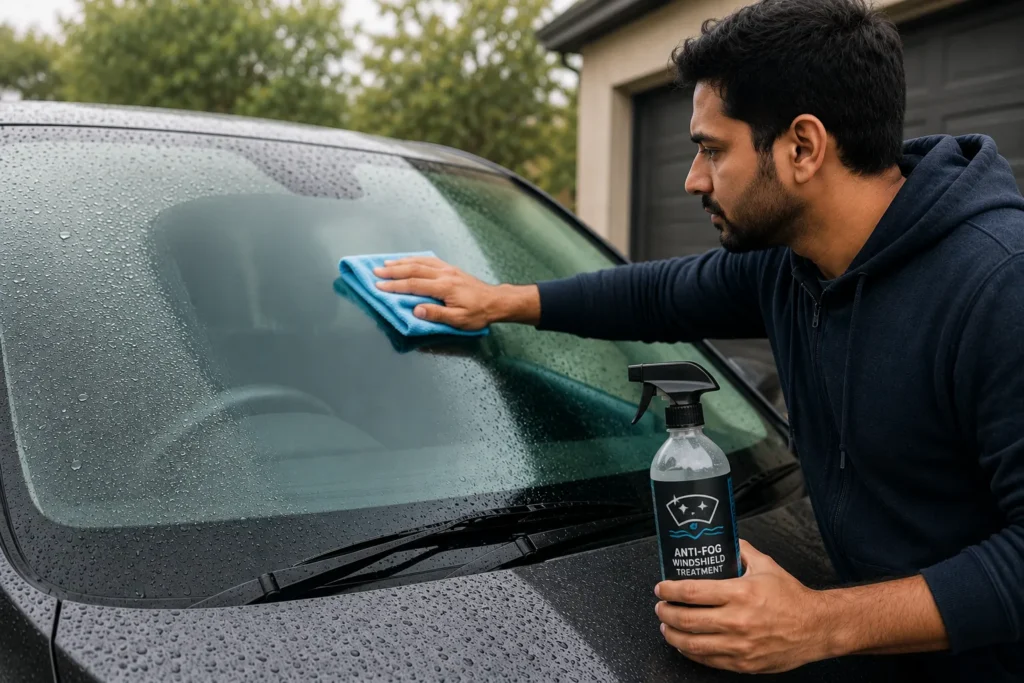
Sometimes the glass itself holds a thin film — from cleaning sprays, dashboard polish, or just general grime — that makes condensation stick and spread instead of clearing quickly.
Mix equal parts white vinegar and water, then wipe the inside of your windshield with a clean microfiber cloth. This cuts through residue and leaves a slightly hydrophobic finish, so fog forms less easily. Commercial anti-fog sprays work the same way, if you’d rather skip the DIY mix.
5. Manage the Moisture You’re Bringing Into the Car
Sometimes the fastest fix isn’t about the AC settings at all — it’s about how much water is coming inside with you. Wet umbrellas, soaked shoes, and damp seats all add humidity to the cabin.
A few small habits help: keep a microfiber towel in the car to dry off before you get in, use a seat cover during monsoon season, and crack the windows for a minute after parking to let trapped humidity escape.
The Bottom Line
A foggy windshield isn’t just annoying — it’s a real visibility hazard, especially in rain when you already have less room for error. The good news is that most fixes cost nothing and take seconds once you know the trick: AC over heat, fresh air over recirculated, and a quick vinegar wipe-down when the glass just won’t stay clear.
Next time the rain rolls in, you’ll be ready — clear windshield, clear head, safer drive.