


Monsoon Driving Checklist: How to Stay Safe When Visibility Turns to Soup
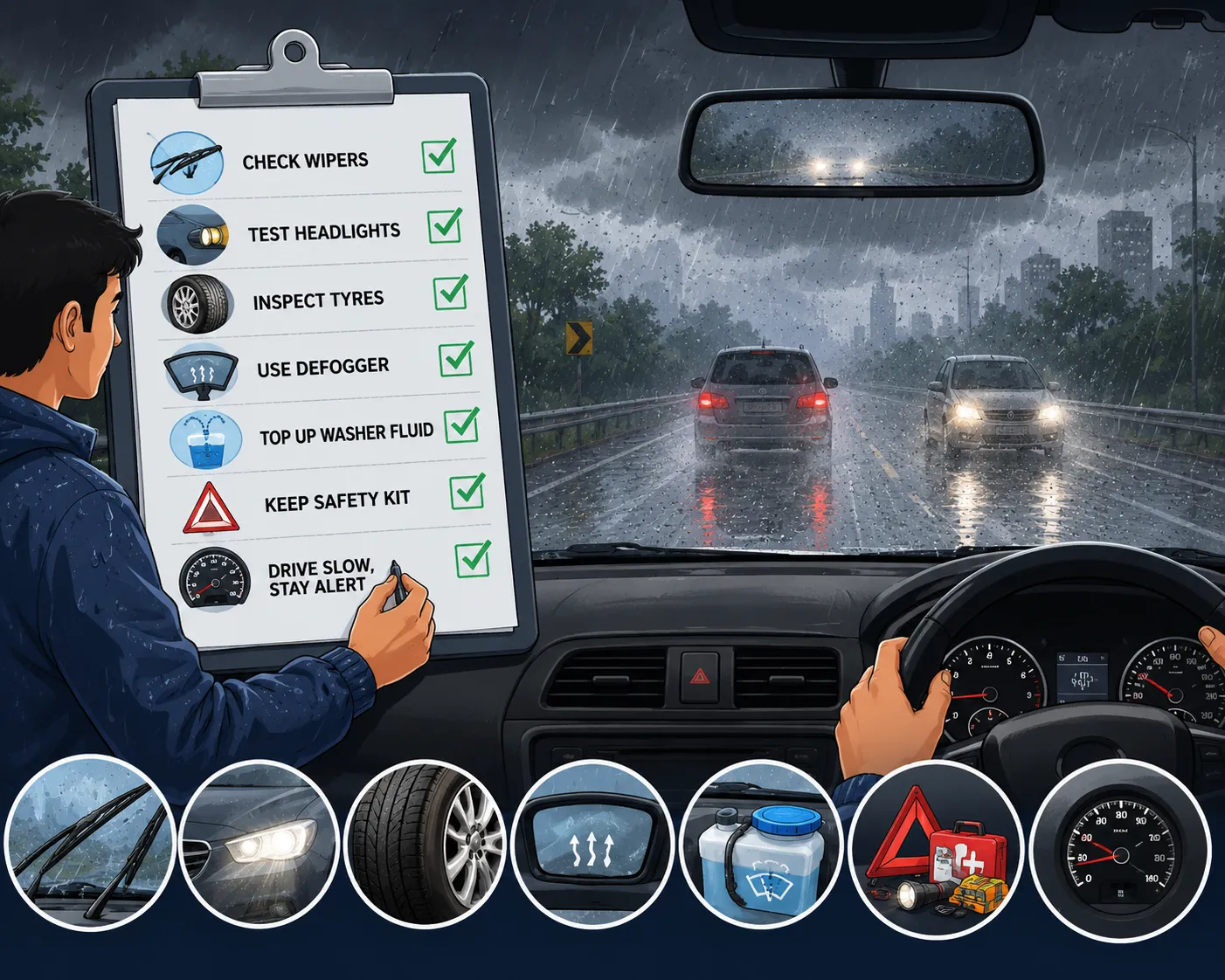
Nothing tests your nerves like driving through a downpour with a windshield that’s fogging up faster than you can wipe it. One second you can see the road, the next you’re squinting through a grey haze trying to figure out if that shape ahead is a pothole or a pedestrian.
Foggy, low-visibility driving is one of the most dangerous parts of monsoon season — and most of it comes down to preparation, not luck. Here’s the checklist I run through every year before the rains hit, broken into what to do before you drive and what to do while you’re out there.
Before You Even Start the Car
1. Check your wipers first, not last. Cracked or hardened wiper blades smear water instead of clearing it. If you’re seeing streaks or a chattering sound, replace them now — don’t wait until you’re already in traffic to find out they’re shot.
2. Top up washer fluid — and use the right kind. Plain water isn’t enough in monsoon; it doesn’t cut through the oily film that road grime and rain leave on your windshield. A proper washer fluid with a rain-repellent additive makes a real difference.
3. Apply a rain-repellent or anti-fog treatment. A hydrophobic coating on the outside of your windshield makes water bead and roll off instead of sheeting, which cuts glare from oncoming headlights. On the inside, an anti-fog wipe or spray on the glass stops that milky haze from building up.
4. Test your defogger and AC before you need it. The fastest way to clear a fogged windshield is cold, dry air aimed at the glass with the AC on and recirculation off. If your defogger vents are weak or your AC isn’t cooling properly, get it looked at before the season starts, not mid-drive.
5. Check every light — not just the headlights. Headlights, tail lights, fog lights, and indicators all need to be working and properly aligned. In heavy rain, other drivers are relying on your lights just as much as you’re relying on theirs.
6. Inspect your tyres. Low tread depth is a fast track to hydroplaning, and once you’re hydroplaning, visibility is the least of your problems. Check tread depth and tyre pressure — underinflated tyres actually increase hydroplaning risk.
While You’re Driving in Fog or Heavy Rain
7. Slow down before visibility drops, not after. By the time you can barely see, you’re already going too fast for conditions. Ease off well before the worst of it hits.
8. Use low-beam headlights, not high beams. High beams reflect off rain and fog and bounce the glare right back at you. Low beams (and fog lights, if you have them) cut through better and reduce glare for oncoming traffic too.
9. Increase your following distance. Wet roads roughly double your stopping distance. In fog, you also need extra room simply to react to what you can’t see coming.
10. Turn off recirculation once the windshield is clear. Recirculation helps you cool the cabin fast, but running it too long lets moisture build back up in the cabin air. Once the fogging clears, switch to fresh air intake to keep it from coming back.
11. Crack a window slightly if fogging won’t quit. When the AC isn’t keeping up, a small gap in the window can equalize humidity between the inside and outside of the car and stop the glass from fogging as fast.
12. Use road markers and tail lights as a guide, not the road edge. In heavy fog, the painted lines or the tail lights of the car ahead are often more reliable than trying to judge the road edge yourself.
13. Know when to just pull over. If visibility drops to the point where you genuinely can’t see the road, pull over safely — well off the road, with hazards on — and wait it out. No trip is worth pushing through zero visibility.
Quick Pre-Monsoon Checklist
✅ Wiper blades replaced if worn
✅ Washer fluid topped up (rain-repellent formula)
✅ Rain-repellent coating applied to windshield
✅ Anti-fog treatment on interior glass
✅ Defogger and AC tested
✅ All exterior lights checked and aligned
✅ Tyre tread and pressure checked
Print this list, stick it in your glovebox, and run through it once before monsoon really sets in. Most foggy-windshield panic moments on the road are preventable with fifteen minutes of prep — the rest comes down to slowing down and giving yourself room to react.
Related reading: Foggy Windshield in Rain — 5 DIY Fixes That Actually Work