


Brake performance in wet conditions — what changes and how to check pads
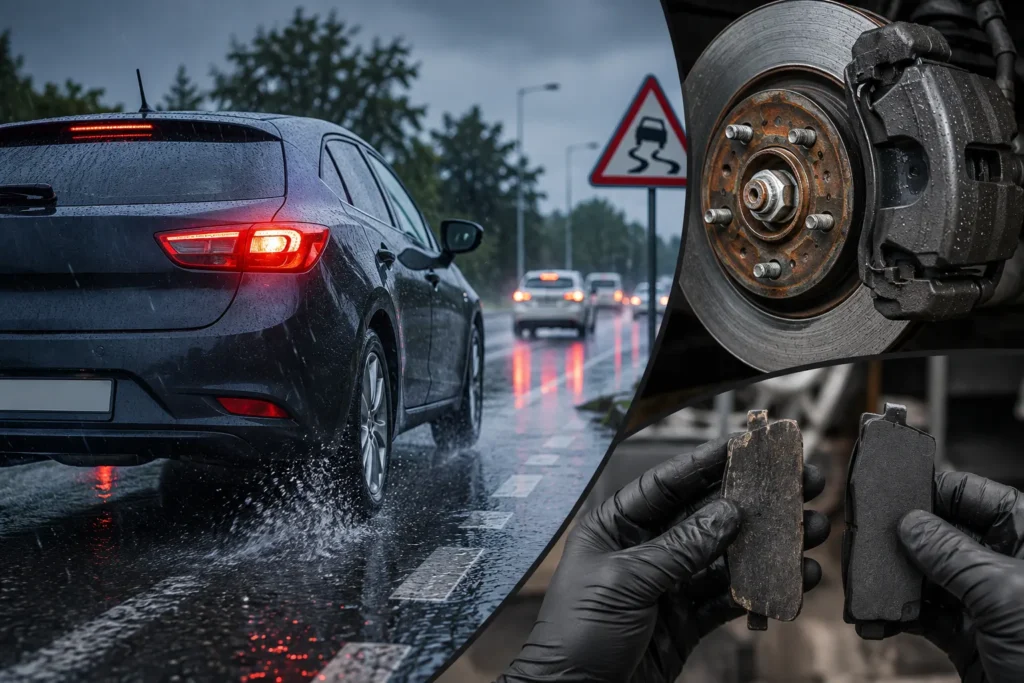
Why Your Brakes Feel Different in the Rain
That first, slightly nervous moment when you hit the brakes on a wet road? It’s not in your head. Water genuinely changes the physics of braking. A few real, measurable shifts happen the moment your tires meet a wet surface. Understanding them can make you a safer driver. It can also help you catch pad problems before they turn into expensive ones.
What Actually Changes When It Rains
1. Reduced Friction Between Pad and Rotor
Brake pads work by creating friction against the rotor to slow the wheel down. A thin film of water can form between the pad and rotor surface. This reduces friction, at least for the first second or two of braking. That’s why your brakes can feel “soft” or delayed right after driving through a puddle.
2. Longer Stopping Distances
Reduced initial friction is only part of the story. Tires also lose grip on wet asphalt, and the two effects add up fast. Stopping distances can increase by two to three times compared to dry pavement, depending on tire condition, speed, and road surface.
3. Brake Fade and Uneven Bite
Worn or glazed pads struggle more in the rain than on dry roads. Glazing is a hard, shiny surface caused by overheating, and wet conditions expose that weakness quickly. You might feel pulsing, uneven bite, or a slight pull to one side as the system searches for consistent contact.
4. Corrosion and Surface Rust
Rotors can develop a thin layer of surface rust after sitting in rain or humidity overnight. This is usually harmless. A few gentle brake applications typically clear it up, so it’s worth recognizing rather than mistaking it for a bigger issue.
5. Squealing or Grinding Noises
Road grit and dust mixed with water can cause temporary squealing. This is common and usually nothing to worry about. If the noise sticks around well after the roads have dried, though, that’s a sign to have the pads inspected.
How to Check Your Brake Pads for Wet-Weather Readiness
You don’t need to be a mechanic to run a basic check. Here’s what to look for:
• Visual thickness check: Most pads have around 10-12mm of material when new. Anywhere below 3mm is considered worn and due for replacement. A flashlight often lets you see the pad through the gaps in your wheel spokes.
• Listen for the wear indicator: Many pads have a small metal tab that creates a high-pitched squeal once the pad wears down. This sound is intentional and designed to warn you early.
• Check for uneven wear: One pad noticeably thinner than the other, whether front vs. rear or left vs. right, can point to a sticking caliper. That problem tends to get worse in wet conditions.
• Look at the rotor surface: Deep grooves, heavy scoring, or a bluish discoloration suggest the rotors may need attention alongside the pads.
• Test brake response after washing or rain: A quick, light tap on the brakes after driving through water helps dry the pads and rotors faster. It’s a small habit worth building.
Simple Habits for Safer Wet-Weather Braking
• Increase following distance in rain, doubling it if roads are heavily flooded.
• Avoid slamming the brakes. Smooth, early braking gives the system time to shed water and regain grip.
• Get pads and rotors inspected at every tire rotation or oil change, not just when something feels wrong.
• Replace pads before they hit minimum thickness. Waiting until the warning squeal starts often means you’re already cutting it close.
The Bottom Line
Wet roads don’t just make driving feel different. They genuinely change how your brakes perform, from friction levels to stopping distance to noise. The good news: most of the risk comes down to one variable you can control, which is pad condition. A five-minute visual check every month or two, paired with attentive driving in the rain, goes a long way toward keeping stopping power where it needs to be when you need it most.
Have your brakes been making noise lately, or is it just the rain? When in doubt, get them checked. It’s a small cost compared to the alternative.