

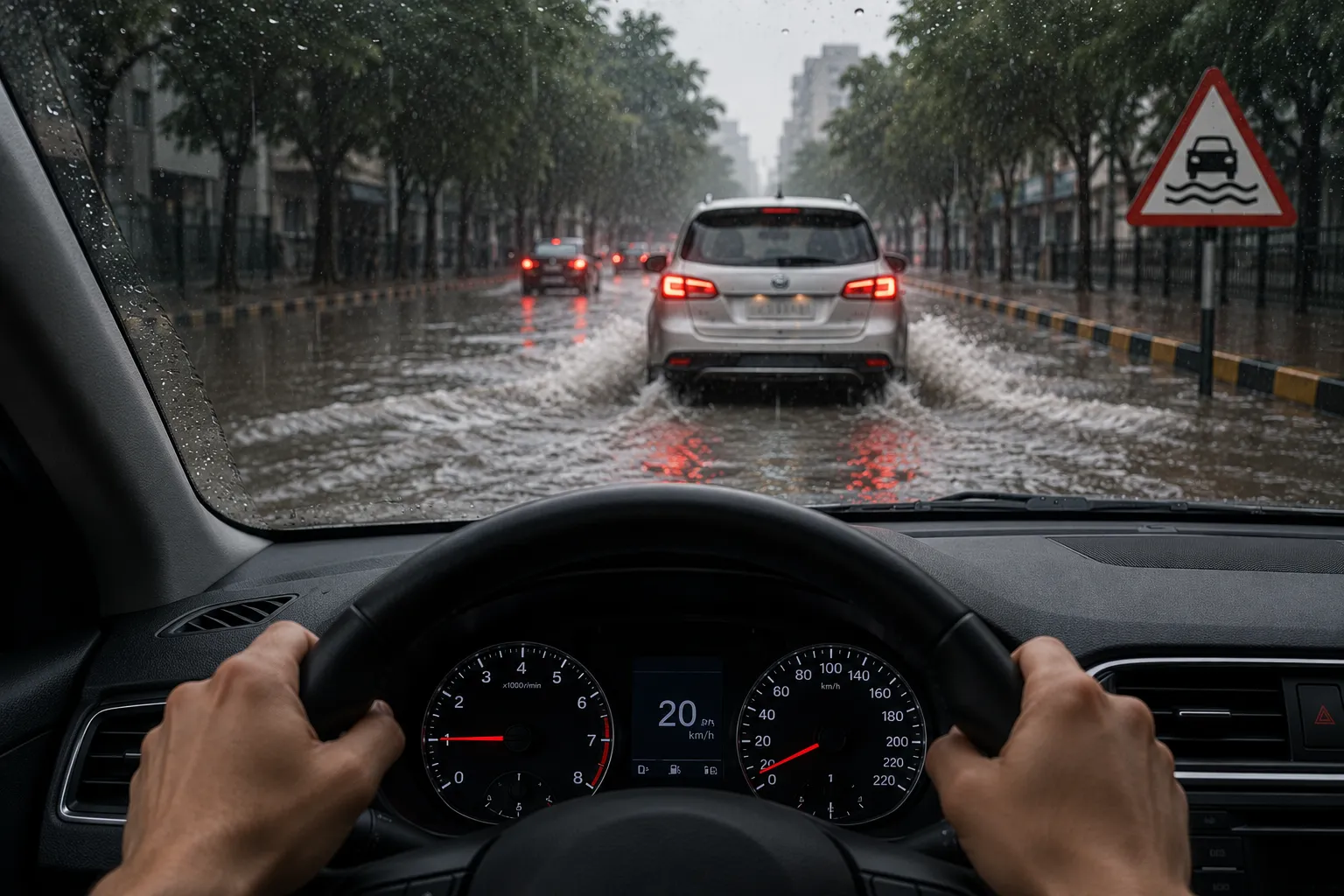

What to Do If You Accidentally Drive Through a Waterlogged Street
If you’re wondering what to do if you drive through a waterlogged street, the short answer is: don’t panic, don’t restart a stalled engine, and get to dry ground before checking for damage. Monsoon season turns ordinary commutes into obstacle courses. One minute you’re driving down a familiar street, the next you’re staring at a stretch of water with no way to tell how deep it really is — or whether the car ahead of you just made it through by luck. If you’ve already driven into a waterlogged patch before realizing how deep it was, what you do in the next few minutes matters far more than you’d think. Handled well, you walk away with nothing worse than a dirty car. Handled badly, you’re looking at a hydrolocked engine and a repair bill that runs into thousands.
This guide walks through exactly what to do — and what not to do — immediately after driving through standing water, plus the checks you should run over the following 24 hours.
What to Do Immediately After Crossing the Water
The first 60 seconds are the most important. What you do here can be the difference between a close call and a blown engine.
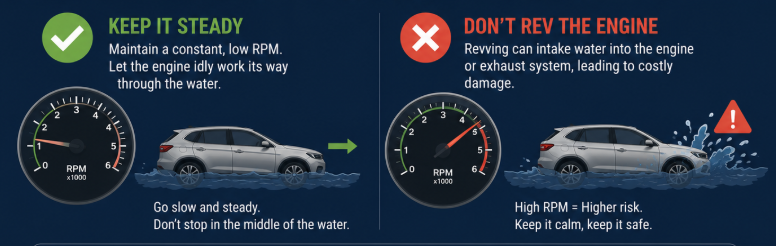
Don’t switch off the engine — but don’t rev it either. If your car makes it through and the engine is still running normally, keep driving to dry, higher ground before you do anything else. Switching off the engine while water is still sitting in the exhaust or anywhere near the intake can let water get sucked backward into the engine when you try to restart. At the same time, resist the urge to rev the engine to “power through” — this increases suction at the air intake and raises the risk of pulling water into the cylinders.
Check for water bubbling from the exhaust pipe. If you notice bubbling, sputtering, or a change in exhaust note while driving through, that’s a sign water may be entering the exhaust system. It’s not always serious on its own, but it’s worth noting alongside any other symptoms.
Listen for unusual engine noise. A knocking, clunking, or grinding sound after driving through water is a red flag. This can indicate water has entered the combustion chamber — a condition known as hydro-lock, where water (which doesn’t compress like air) prevents the pistons from completing their stroke. Left unaddressed, this can bend a connecting rod or crack a piston.
What to Do If Your Engine Stalls Mid-Water
This is the scenario where your next decision has real financial consequences.
Do NOT attempt to restart the car. This is the single most important rule in this entire guide. If the engine stalls while you’re in standing water, turning the key again is often what turns a simple repair into an engine rebuild. If water has entered the cylinders, cranking the engine again forces the pistons against a fluid that won’t compress, which can bend rods, crack the block, or destroy the engine entirely.
Turn on your hazard lights and stay safe first. Before worrying about the car, make sure you and any passengers are safe — unbuckle, check the water isn’t rising further, and get out if needed, especially if the water level is high enough to reach the door sills.
Push the car to dry ground instead of cranking it. Put the car in neutral and, with help from bystanders or a co-passenger, push it out of the water rather than trying to drive out. If the water is too deep or the current too strong to push safely, prioritize personal safety over the vehicle.
Call for a tow rather than forcing a restart. Once the car is out of the water — or even if it’s still partially in it — call roadside assistance or a tow service. Explain that the engine stalled in water so the mechanic knows to check for hydrolock before doing anything else, including before they attempt a jump-start or test crank.
First Checks Once You’re Safe
Once you’re clear of the water and the car is either running or has been towed, run through these checks before you go anywhere else.
Check the engine oil for a milky or frothy appearance. Pull the dipstick and look at the oil. If it looks milky, frothy, or has a coffee-with-cream consistency, water has likely mixed into the oil — this needs to be addressed before the engine runs any further, since water in the oil offers no lubrication and can cause rapid internal wear.
Inspect the air filter box for water. Open the air filter housing and check whether the filter itself is wet or if there’s standing water pooled inside the box. A soaked air filter restricts airflow and, if enough water got past it, may indicate some also reached the intake manifold.
Check the brakes — pump gently to dry them out. Wet brake pads and rotors reduce braking performance significantly. At low speed in a safe area, gently pump the brakes a few times; the friction helps dry out the pads and rotors and restores normal stopping power. Avoid heavy braking until you’ve confirmed the brakes feel normal.
What to Do in the Next 24 Hours
Even if the car seems to be running fine, don’t consider the incident closed. Water damage often shows up hours or days later.
Avoid short trips — get the oil, air filter, and electricals inspected. Book a mechanic visit as soon as possible. A short commute isn’t a real test of whether water made it somewhere it shouldn’t have; a trained eye checking the oil, filters, and wiring will catch problems before they escalate.
Check for water inside the headlamps or taillamps. Fogged-up or water-filled lamp housings are common after wading through deep water and, while not usually urgent, should be dried out or serviced to prevent bulb and connector damage over time.
Inspect the battery terminals for corrosion. Water exposure accelerates corrosion on battery terminals, which can cause starting issues or intermittent electrical faults down the line. Clean any visible corrosion and make sure terminals are dry and securely connected.
When to Call a Professional vs. DIY
| Situation | DIY | Call a Professional |
|---|---|---|
| Engine still running, no unusual noise | ✅ Drive to dry ground, monitor | — |
| Engine stalled in water | ❌ Do not attempt to restart | ✅ Tow and inspect for hydrolock |
| Milky/frothy oil | — | ✅ Oil and filter change, engine inspection |
| Wet air filter, no odd sounds | ✅ Dry or replace filter | — |
| Knocking/grinding noise after driving through water | — | ✅ Immediate inspection — possible hydrolock |
| Foggy headlamps/taillamps | ✅ Dry out, monitor | ✅ If moisture persists or bulbs fail |
| Corroded battery terminals | ✅ Clean with basic tools | ✅ If starting issues persist |
| Brakes feel spongy or delayed after drying | — | ✅ Brake system inspection |
Quick Reference: Dos and Don’ts
Do:
• Keep the engine running if it’s already running — get to dry ground first
• Push the car out of water if it stalls, rather than restarting it
• Check oil, air filter, and brakes once safe
• Get a professional inspection within 24 hours
Don’t:
• Restart a stalled engine while it’s in or near water
• Rev the engine to try to power through deep water
• Ignore knocking or unusual noises after driving through water
• Assume everything’s fine just because the car still drives normally
Waterlogged streets aren’t always avoidable, especially in cities with poor monsoon drainage. But if you ever find yourself unsure what to do if you drive through a waterlogged street, remember that the outcome comes down to what happens in the minutes right after — not the moment you were in the water itself. When in doubt, don’t crank the engine, and let a mechanic make the call.