


How Monsoon Rain Damages Paint (Acid Rain, Water Spots, Tar) and How to Prevent It
Why Monsoon Season Is Rough on Your Car’s Paint
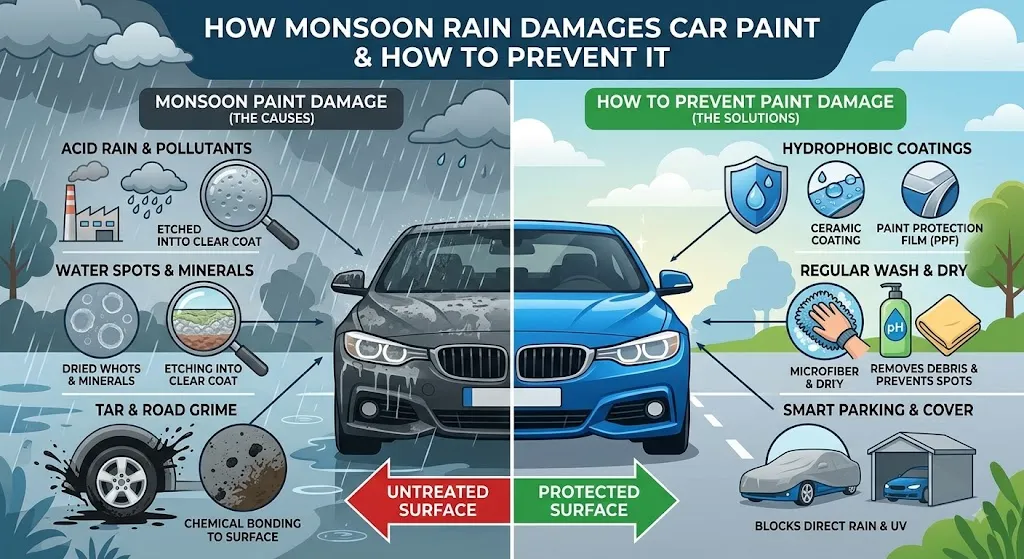
Monsoon season brings relief from the heat, but it isn’t kind to your car’s exterior. Rainwater isn’t as harmless as it looks. It carries pollutants, minerals, and acidic compounds that can dull, etch, or stain your paint over weeks of exposure. Add road tar and grime kicked up from wet streets, and your car’s finish takes a real beating during the rainy months. Understanding what’s actually happening to the paint makes it much easier to prevent lasting damage.
What Actually Happens to Your Paint in the Rain
1. Acid Rain and Chemical Etching
Rainwater picks up pollutants from the atmosphere as it falls, including sulfur dioxide and nitrogen oxides from vehicle exhaust and industrial emissions. These combine with moisture to form mild acidic compounds. When acidic rainwater sits on your car’s paint and dries, it can eat into the clear coat. This leaves faint etching marks, dull patches, or a slightly rough texture where the finish once looked glassy.
2. Water Spots from Mineral Deposits
Rainwater contains dissolved minerals like calcium and magnesium. As droplets sit on the paint and evaporate in the sun, they leave those minerals behind. This creates the ring-shaped white or cloudy spots you often see after a car dries naturally. Left untreated, these spots can bond to the clear coat and become much harder to remove.
3. Tar and Road Grime Buildup
Monsoon roads are often coated with oil residue, tar, and grime that gets stirred up by traffic and standing water. These particles stick to your car’s lower panels, wheel wells, and bumper, and they’re notoriously difficult to wash off with a regular rinse. Left on the paint for too long, tar can bond to the surface and cause staining.
4. Prolonged Moisture and Trapped Grime
Cars parked outdoors during monsoon season stay damp for longer stretches, especially in shaded or humid areas. Trapped moisture, combined with dust or organic matter like tree sap and bird droppings, creates a slow chemical reaction against the paint. Over time, this can lead to dullness, minor pitting, or even the beginnings of surface rust on unprotected metal edges.
5. UV Exposure Between Downpours
Monsoon weather isn’t constant rain. It cycles between wet spells and strong sun, and that combination is particularly harsh. Paint that’s already been softened or etched by acidic moisture becomes more vulnerable to UV damage once the sun comes back out, accelerating fading and clear coat breakdown.
How to Prevent Monsoon Damage to Your Paint
1. Wash Your Car Regularly, Not Just When It Looks Dirty
Rinsing off rainwater residue, tar, and grime within a day or two prevents these substances from bonding to the paint. A simple rinse with clean water and a pH-neutral car shampoo goes a long way during the monsoon months.
2. Dry the Car After Every Wash or Rain Exposure
Letting water evaporate naturally is exactly what causes water spots. Wiping the car down with a microfiber towel after washing, or even after a heavy shower once it stops, helps prevent mineral deposits from setting in.
3. Apply a Wax or Sealant Before the Season Starts
A quality wax, sealant, or ceramic coating creates a barrier between the paint and rainwater. This makes acidic residue and mineral deposits sit on top of the protective layer instead of directly on the clear coat, and it makes washing significantly easier too.
4. Treat Tar Spots Promptly
Use a dedicated tar remover or clay bar rather than scrubbing at stuck-on residue, which can scratch the paint. Catching tar early, before it hardens, makes removal far easier.
5. Park Under Cover When Possible
A carport, garage, or even a car cover during heavy monsoon weeks reduces prolonged exposure to both acidic rain and the harsh sun that follows it. If covered parking isn’t available, a breathable car cover is a reasonable alternative.
6. Check and Clean Hidden Areas
Wheel wells, door jambs, and the underside of the car trap moisture and grime that’s easy to overlook. A periodic rinse of these areas prevents buildup that can lead to corrosion over time.
People Also Ask
It’s not a myth. Rainwater can carry mild acidic compounds and minerals that etch the clear coat or leave water spots, especially with repeated exposure over the monsoon season.
Within a day or two is ideal. The longer acidic residue, tar, or mineral deposits sit on the paint, the more likely they are to bond to the surface.
Light water spots often come out with a clay bar treatment or a light polish. Deeper, long-set spots may need professional paint correction to fully remove.
It’s one of the most effective preventive steps available. A fresh coat of wax or sealant gives rainwater and contaminants less direct contact with the paint, significantly reducing etching and staining.
A breathable, waterproof car cover can help, especially where garage parking isn’t available. It reduces direct water and sun exposure, though regular washing is still important underneath it.
The Bottom Line
Monsoon rain does more damage to car paint than most people realize, from acidic etching to stubborn water spots and tar buildup. The good news is that most of this damage is preventable with consistent habits: regular washing, prompt drying, and a protective wax or sealant applied before the season kicks in. A little upkeep during the rainy months goes a long way toward keeping your car’s finish looking the way it should once the skies clear up.
Noticed dull patches or spotting on your car after the last few rains? A thorough wash and a fresh coat of wax is often all it takes to bring the shine back, as long as you catch it early.