


Wiper Blade Maintenance: When to Replace and How to Extend Their Life
Why Wiper Blades Deserve More Attention Than They Get
Most drivers only think about wiper blades the moment it starts raining and visibility suddenly drops. By then, it’s often too late for a quick fix. Wiper blades are a small part, but they do a big job. They’re one of the few components standing between you and a clear windshield in bad weather. A little regular attention goes a long way toward keeping them reliable.
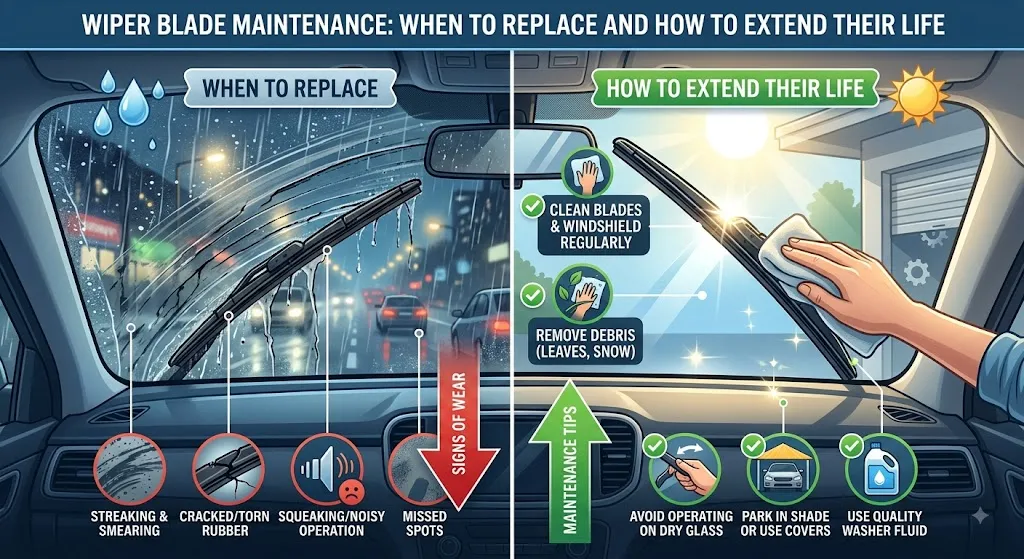
Signs It’s Time to Replace Your Wiper Blades
1. Streaking Across the Windshield
Thin lines of water left behind after a wipe usually mean the rubber edge has worn unevenly. This is one of the earliest and most common signs of aging blades.
2. Skipping or Chattering
If the blade jumps or skips instead of gliding smoothly, the rubber may have hardened or lost its flexibility. Cold weather can make this worse, since stiff rubber struggles to maintain even contact with the glass.
3. Squeaking Noises
A high-pitched squeak usually points to dirt, grime, or oxidized rubber on the blade’s edge. Occasional squeaking after a wash isn’t unusual, but a persistent squeak on every pass is a clear signal.
4. Visible Cracks or Splits
Rubber degrades with sun exposure and temperature swings over time. Cracks, splits, or a rounded edge instead of a sharp one all mean the blade can no longer form a tight seal against the glass.
5. Reduced Coverage or Missed Spots
If you notice a section of the windshield staying wet or streaked no matter how many passes the wiper makes, the blade has likely lost contact in that area. This often happens near the ends first.
6. It’s Been Over a Year
Even wipers that look fine can perform worse than they should. Rubber breaks down gradually from UV exposure and temperature changes, so most manufacturers recommend replacement every six to twelve months regardless of visible wear.
How to Extend the Life of Your Wiper Blades
Keep the Windshield Clean
Dust, pollen, and road grime act like sandpaper against the rubber edge every time the wiper passes over them. Washing your windshield regularly reduces this wear and keeps the blades gliding smoothly.
Clean the Blades Themselves
Wipe the rubber edge with a soft cloth and a little glass cleaner or rubbing alcohol every few weeks. This removes built-up grime that causes streaking and squeaking, and it takes less than a minute.
Avoid Using Wipers on a Dry Windshield
Running wipers over dry glass creates extra friction and heat, which speeds up rubber breakdown. A quick washer fluid spray before wiping protects the blades and gives better results anyway.
Park in the Shade When Possible
UV exposure is one of the biggest factors behind cracked, brittle rubber. Parking in a garage or shaded area, even occasionally, helps slow that process.
Lift Blades During Ice or Snow
In freezing conditions, lifting the wiper arms away from the glass prevents them from freezing to the windshield. Forcing a frozen blade to move can tear or warp the rubber edge.
Check Alignment and Arm Tension
A wiper arm that doesn’t press evenly against the glass will wear the blade unevenly and leave streaks even when the rubber is in good shape. If one side of the blade always seems to miss a spot, the arm tension or alignment may need adjusting.
Frequently Asked Questions
Q. How often should wiper blades be replaced?
A. Most manufacturers recommend replacement every six to twelve months. Drivers in areas with intense sun, heavy rain, or harsh winters may need to replace them closer to the six-month mark.
Q. Can I repair a wiper blade instead of replacing it?
A. Minor grime and buildup can be cleaned off, which sometimes restores performance. Cracked, split, or hardened rubber can’t be repaired and needs a full replacement.
Q. Why do my wipers streak even though they’re new?
A. New blades can streak if the windshield itself is dirty, waxed, or coated with residue. Cleaning the glass thoroughly before judging the blades often solves the issue.
Q. Do expensive wiper blades last longer than cheap ones?
A. Higher-quality blades often use more durable rubber compounds and hold up better against UV exposure, but climate and driving habits still play a major role in how long any blade lasts.
Q. Is it bad to use wipers without washer fluid?
A. Occasional dry use won’t ruin a blade, but doing it regularly increases friction and speeds up wear. Keeping washer fluid topped up is a simple way to protect them.
The Bottom Line
Wiper blades are inexpensive, but their impact on safety is significant. Streaking, skipping, squeaking, or visible cracks all mean it’s time for a replacement, even if the blades still technically work. Beyond replacement, a few small habits, like keeping the glass clean and avoiding dry wiping, can meaningfully extend how long a good set of blades lasts. It’s a small maintenance task that pays off the moment visibility matters most.
Not sure if your wipers need replacing? Run a finger along the rubber edge. If it feels rough, cracked, or uneven, that’s usually all the answer you need.